In 2026, effective search performance measurement has evolved far beyond simple rankings and backlink counts. Today’s SEO landscape demands tools that not only report metrics but help interpret real SEO metrics that impact visibility, traffic, AI-search inclusion, and user intent. Fortunately, a growing number of free SEO tools provide actionable insights without the cost of enterprise platforms.
Below, we explore the top free resources you can use to perform meaningful SEO audit checks and understand the health and performance of your site in the modern search ecosystem.
Google Search Console remains one of the most foundational SEO tools available for free. It provides direct insight into how Google sees your site, including:
This tool is particularly valuable because it shows accurate SEO performance data straight from the search engine itself. It helps you identify which queries contribute meaningfully to traffic and where visibility improvements are possible.
Best for: Tracking real keyword impact, identifying indexing or mobile usability issues, and monitoring AI-search performance as Google evolves its ranking signals.
Bing powers significant search traffic through Microsoft products and AI assistants. Bing Webmaster Tools is a powerful free alternative that complements Google Search Console with:
Its site health check scanner gives prioritized optimization suggestions, making it a useful website audit tool if you manage multilingual or multi-domain properties.
Best for: Broader search visibility, performance comparison with Google, and technical site evaluations you can act on immediately.
Page speed and Core Web Vitals remain critical ranking factors in 2026. PageSpeed Insights is a free website optimization tool that measures:
It pulls real field data (when available) and lab data to help you prioritize which performance issues matter most. Faster, smoother sites are more likely to be surfaced by AI agents delivering instant answers.
Best for: Improving site speed, reducing bounce rates, and aligning performance with modern ranking benchmarks.
For a more comprehensive SEO audit, Ahrefs Webmaster Tools is one of the most capable free platforms available for:
Its intuitive interface helps you pinpoint content issues and technical gaps that most directly correlate with organic performance.
Best for: Technical health audits and backlink insight you can use to refine on-page and off-page strategy.
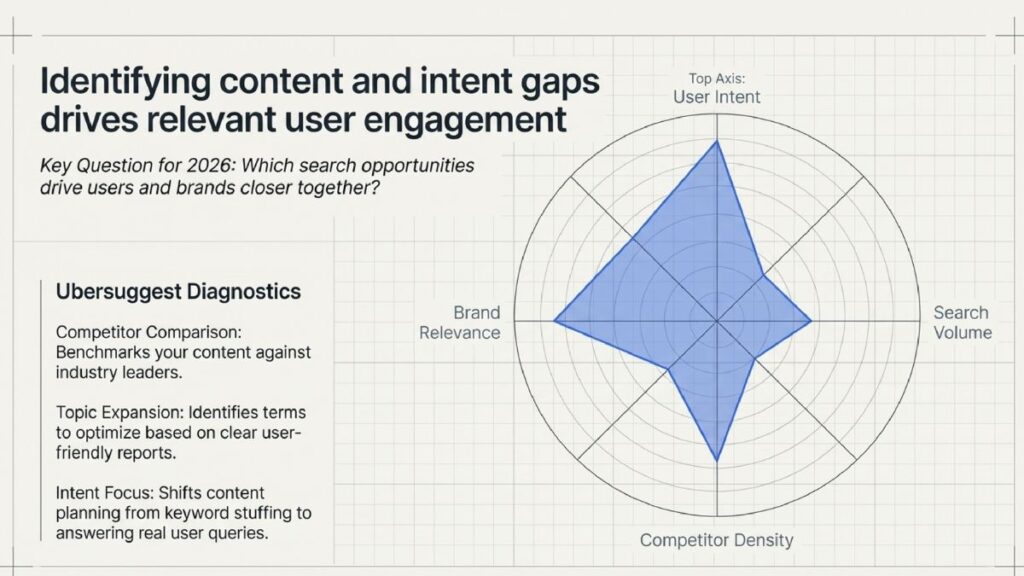
While some features are limited in the free tier, Ubersuggest remains a useful free SEO tool for identifying content gaps and Competitor performance comparison.
This helps you answer one of the key questions in 2026: Which search opportunities drive users and brands closer together? Its user-friendly reports make it clear which topics and terms you should optimize or expand.
Best for: Keyword opportunity analysis and content planning with a focus on intent.
Screaming Frog is a powerful desktop-based website audit tool that crawls your site just like a search engine crawler would. The free version allows up to 500 URLs per crawl and shows:
This granular analysis helps you spot structural and accessibility issues that block indexing or lower your site’s trust in AI-driven ecosystems.
Best for: Technical SEO audits and quick identification of crawlability issues.
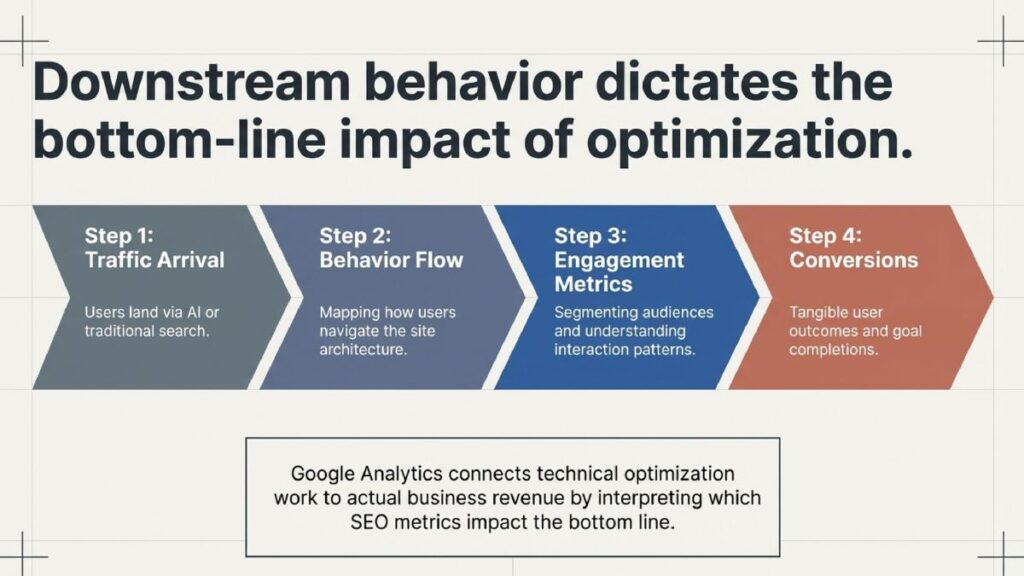
While not a traditional SEO tool, Google Analytics remains critical for connecting your optimization work to tangible user outcomes, such as:
Understanding how users interact with your site once they arrive is essential to interpreting which real SEO metrics impact your bottom line.
Best for: Measuring downstream impact of traffic and understanding engagement patterns.
The landscape of search in 2026 demands that brands use free SEO tools wisely to monitor health, performance, and visibility across platforms.
While the free tools provide valuable directional insights, they are no longer sufficient on their own as search shifts toward AI-driven discovery. When combined, a freemium stack can support execution, but the depth, accuracy, and competitive intelligence required to win in AI search demands an expert approach.
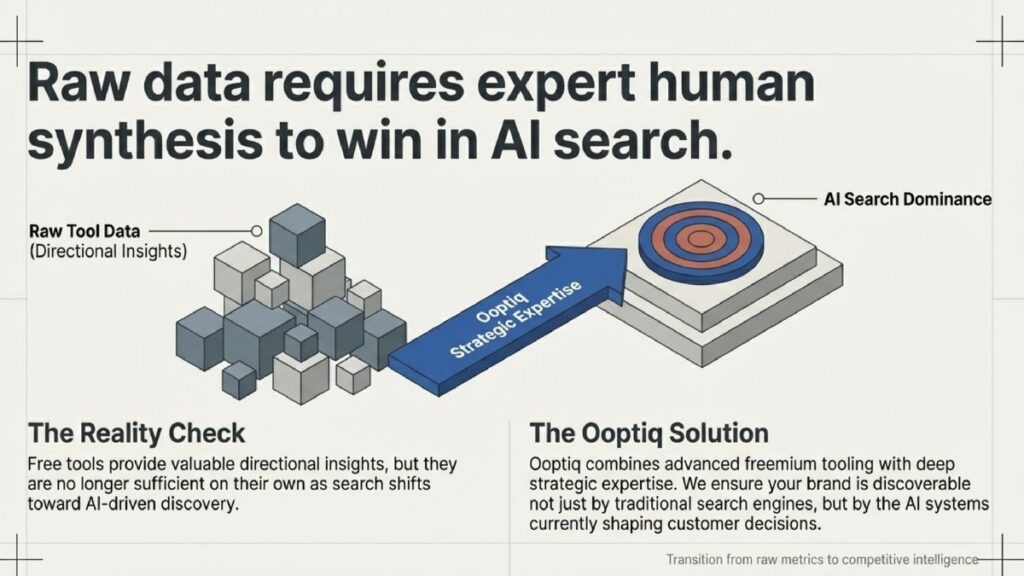
This is where an experienced agency like Ooptiq adds value—combining advanced tooling with strategic expertise to ensure brands are discoverable not just by search engines, but by AI systems shaping customer decisions.