
For years, the SEO playbook has been a one-party system. “Google it” became the mantra, and Microsoft Bing was often relegated to the “other” category in monthly reports.
But as we head further into 2026, the tide is turning. If your agency is still telling you to ignore Bing SEO, they might be stuck in the past. With the rise of AI-driven search and a shift in user hardware, the Bing search engine is no longer just an underdog; it’s a high-intent goldmine for brands that know where to look.
| Fun Fact: The most searched term on Bing was actually… “Google.” People use the underdog to find the giant, but they see your Bing ads and organic results along the way! |
While Google dominates mobile, Microsoft Bing owns a significant slice of the desktop market, holding nearly 10.29% of global desktop searches. Beyond being just a stat, it’s a demographic goldmine.
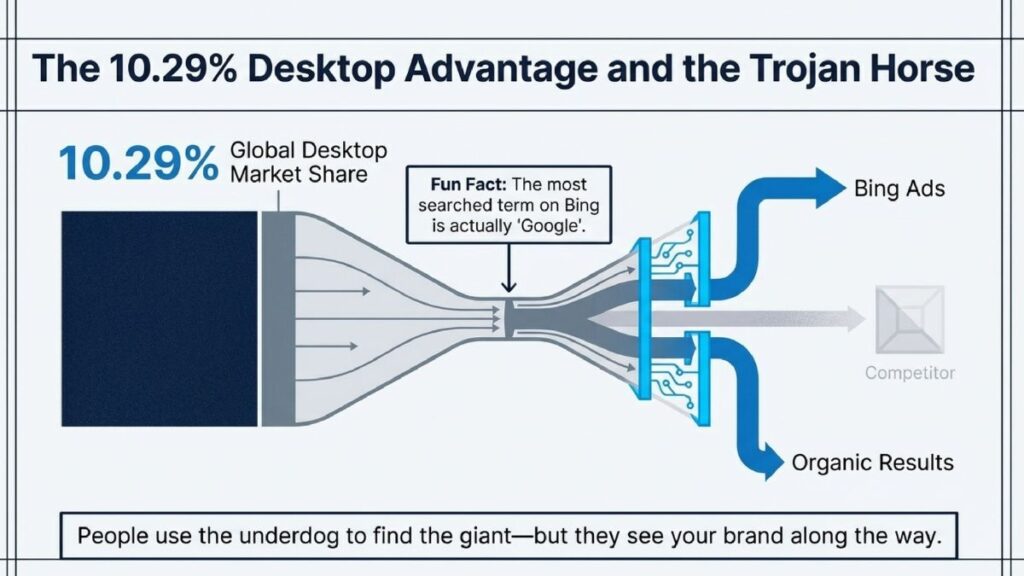
Bing users tend to be more affluent and educated. Roughly 41% of Bing users in the U.S. have a household income of over $100,000. Because Bing is the default on Windows and Xbox, you aren’t just reaching “searchers”, you’re reaching decision-makers in corporate offices who are often browsing on company-issued devices where Microsoft Edge is the only or default option.
Bing ranking is often less competitive. While everyone is fighting for a spot on Google’s page one, the “blue ocean” of Bing is waiting.
Unlike Google’s secretive algorithms, Bing is surprisingly transparent. They love exact-match keywords in headers and prioritize “official” social media signals. Furthermore, Bing optimization places a heavy emphasis on multimedia — high-quality images and videos are often indexed and rewarded faster here.
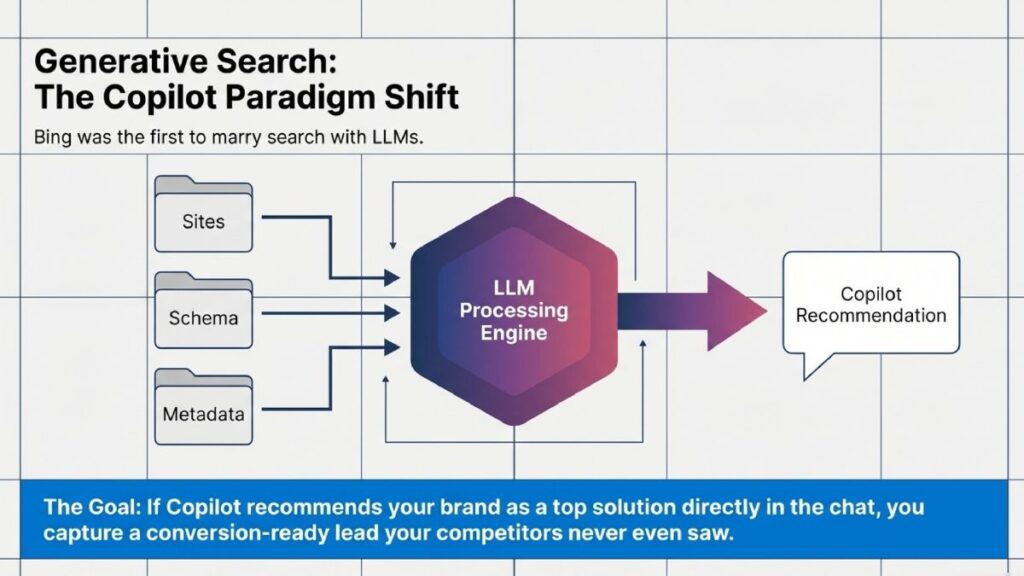
Does Bing’s integration with AI and Copilot change the SEO strategy for 2026? Absolutely. Bing was the first to marry search with LLMs. Optimizing for Bing today isn’t just about links; it’s about feeding the AI. By using Bing Webmaster Tools, you can ensure your site is being crawled properly for “Generative Search.” If Copilot recommends your brand as a top solution, that’s a conversion-ready lead your competitors are missing.
1. Is Bing SEO different from Google SEO?
Yes. While both value quality, Bing places more weight on exact-match keywords, social media signals, and the technical “cleanness” of the site. Using Bing Webmaster Tools is essential to track these specific metrics.
2. Is it worth investing in Bing optimization for B2B brands?
Definitely, since Microsoft 365 is the standard for most global corporations, your B2B target audience is likely using Bing by default during work hours.
3. How do I start ranking on the Bing search engine?
Start by claiming your business on Bing Places and submitting your sitemap via Bing Webmaster Tools. Ensure your metadata is clear and that your site uses Schema markup.